 Português
 English
 Español

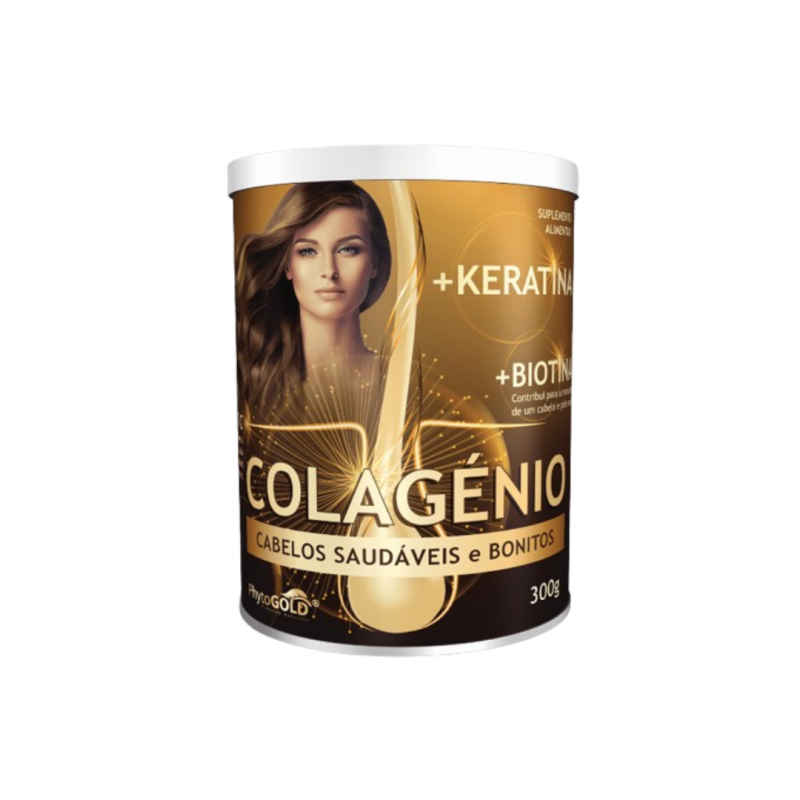
Contains: Kg (75.00 / Kg)
Phytogold Collagen Healthy and Beautiful Hair is the NEW Supplement from Phytogold, packed with essential nutrients for your hair's health. It helps accelerate growth, prevent hair loss, strengthen hair, and enhance shine for healthy, beautiful hair.

Política de segurança (editar com o módulo Garantia do cliente)

Política de entrega (editar com o módulo Garantia do cliente)

Política de devolução (editar com o módulo Garantia do cliente)
Be a fundamental part of hair structure ✓ Prevent hair loss ✓ Reduce and stop hair loss ✓ Prevent scalp inflammation ✓ Protect hair from daily aggressions ✓ Have an anti-inflammatory action ✓ Have excellent oxygenation and transport of nutrients to the scalp ✓ Promote healthy hair growth. Hair loss is usually not a cause for alarm, as it can occur completely naturally, especially during colder times of the year, such as autumn and winter. During these times, hair falls out more because the hair root is less nourished by nutrients and blood, which can increase hair loss. Collagen (hydrolyzed), a fundamental part of hair structure, helps hydrate and rejuvenate the strands, leaving them shinier, softer, and stronger, while promoting healthy growth. Collagen is present in the hair fiber, deeply hydrating our hair strands and, like in the skin, efficiently rejuvenating the strands, leaving them strong, shiny, and soft, while promoting healthy growth. 90% of our hair is made of Keratin. Keratin is a fibrous protein that makes up various parts of the human body, such as hair and nails. Composed of amino acids, it represents about 90% of the hair strand and is responsible for making the hair strong, healthy, and full-bodied, used in various hair treatments in beauty salons. It acts as protection and fills in gaps caused by external processes or organic deficiencies. Biotin helps with hair loss and faster hair growth. Biotin, a B-complex vitamin, not only helps prevent hair loss but also contributes to reducing dandruff. Biotin improves blood circulation, in addition to facilitating the absorption of other essential B-complex vitamins, crucial for the nervous system. Brewer's yeast, to stop hair loss, is produced from a fungus present in barley tanks during beer fermentation. There are several types of yeast, but the one that stands out for its nutritional value is undoubtedly brewer's yeast, resulting from the production of this beverage. Brewer's yeast is considered by many to be a complete food because it is rich in B-complex vitamins (B1, B2, B6, pantothenic acid, niacin, folic acid, biotin, choline, inositol, etc.). It also contains all essential amino acids (alanine, arginine, aspartic acid, leucine, lysine, isoleucine, threonine, among others) and many minerals (including potassium, sodium, calcium, phosphorus, magnesium, sulfur, zinc, selenium, and chromium). Brewer's yeast is also a considerable source of DNA and RNA, two important nucleic acids that stimulate the immune system and help improve brain function in terms of memory and premature aging. Brewer's yeast is an excellent restorative and protector of the nervous system, helping with stress and physical and mental fatigue, strengthening the immune system to protect against diseases, and mainly contributing to strengthening hair follicles and hair, reducing and even stopping hair loss, and supporting healthy hair growth. What does Magnesium have to do with hair loss? Everything! Magnesium has a powerful effect on the body. In addition to being responsible for over 300 enzymatic functions and processes, magnesium directly affects the immune system. This substance helps prevent hair loss as an excellent anti-inflammatory. Inflammations directly affect the health of your hair and hair follicles. When they occur frequently, cells end up dying, leading to hair loss. Magnesium acts as an anti-inflammatory, preventing these cells from dying. Additionally, magnesium also works by strengthening and stimulating the growth of enzymes essential for the body's functioning. How does a Magnesium deficiency affect your hair? A deficiency of Magnesium can cause apathy, fatigue, irritability, etc., and as a consequence, significant hair loss. Magnesium stimulates the electrical signals released by the nervous system, allowing better communication between mind and body and their functions. Magnesium dissolves calcium deposits, restoring oxygenation and nutrient transport to the scalp. Since the absence of magnesium (or low levels) in the body interferes with how calcium is distributed throughout the body, in the long run, magnesium deficiency can result in inflammation and calcium deposits in hair follicles. Scalp calcification, contracting blood supply to hair follicles, causes a reduction in nutrient flow leading to hair loss and baldness. According to some experts, alopecia and baldness are directly linked to magnesium deficiency in the body. The first researcher to investigate and promote the effects of magnesium was a French surgeon, Professor Pierre Delbet MD. Gradually, Prof. Delbet discovered that magnesium is extremely beneficial for hair and nails and a strong ally in preventing baldness. Vitamin C protects hair from daily aggressions. Pollution, cigarette smoke, and solar radiation induce the body to produce free radicals, molecules that damage cells and hair structure. Free radicals oxidize the strands and damage their cuticle, making them dry and dull. Vitamin C provides shine, strength, and nourishment to the hair. Without Vitamin C, hair loses its
No customer reviews for the moment.
Depridil is a dietary supplement recommended for cases of depression and anxiety, as it stabilizes the production of neurotransmitters, shaping their absorption at the cellular receptor level.
Contains: 60 Cápsulas (0.39 / Cápsula)

Contains: 60 Cápsulas (0.22 / Cápsula)
Contains: 50 Comprimidos (0.34 / Comprimido)


Contains: 30 Cápsulas (0.39 / Cápsula)
Contains: 120 Cápsulas (0.36 / Cápsula)

Organic preparation made with freshly harvested echinacea to boost our body's defenses.
Contains: L (256.00 / L)


Intensive computer users, diabetic retinopathy patients, and individuals experiencing eye strain, dry eyes, or eye circulation issues can benefit from this product.
Contains: 30 Cápsulas (0.77 / Cápsula)
A great support for your body.

